Embrace the Holiday Spirit: Celebrate Global Traditions from Germany to Japan
- Tisha Spencer
- Dec 15, 2025
- 9 min read


The holiday season? It’s got a vibe all its own. As the air gets that chilly bite and snowflakes start their dance, folks everywhere come together to celebrate in their own special ways. Whether you’re snuggled up at home with a hot cocoa or dreaming about your next adventure, checking out how different cultures celebrate this festive time can totally spark some ideas for your own holiday plans.
Let’s Hit the Road
First up, let’s wander over to Germany. Picture this: charming Christmas markets filled with twinkling lights, the smell of roasted chestnuts wafting through the air, and a mug of mulled wine in hand. It’s all about cozy vibes and festive cheer here. Now, let’s hop over to Japan. Their winter celebrations are a whole different kind of serene. Think peaceful temples, beautiful illuminations, and delicious seasonal treats like mochi and hot sake. It’s a perfect mix of tradition and tranquility. Don’t forget about Australia! While the rest of us are bundled up, they’re soaking up the sun at beach barbecues. Christmas down under means enjoying fresh seafood and a laid-back vibe, making it a unique twist on the holiday season. And how could we skip Kwanzaa in the U.S.? This vibrant celebration is all about community, culture, and connection. From the colorful decorations to the delicious dishes like gumbo and sweet potato pie, it’s a time for reflection and togetherness.
Travel Tips and Tasty Treats
Along the way, I’ll share some luxe travel spots and must-see cultural experiences that’ll make your holiday season unforgettable. And of course, we can’t forget about the traditional dishes that really capture the spirit of each place. So, whether you’re planning a getaway or just dreaming about it, let’s make this holiday season one for the books!
Germany’s Magical Christmas Markets and Festive Flavors
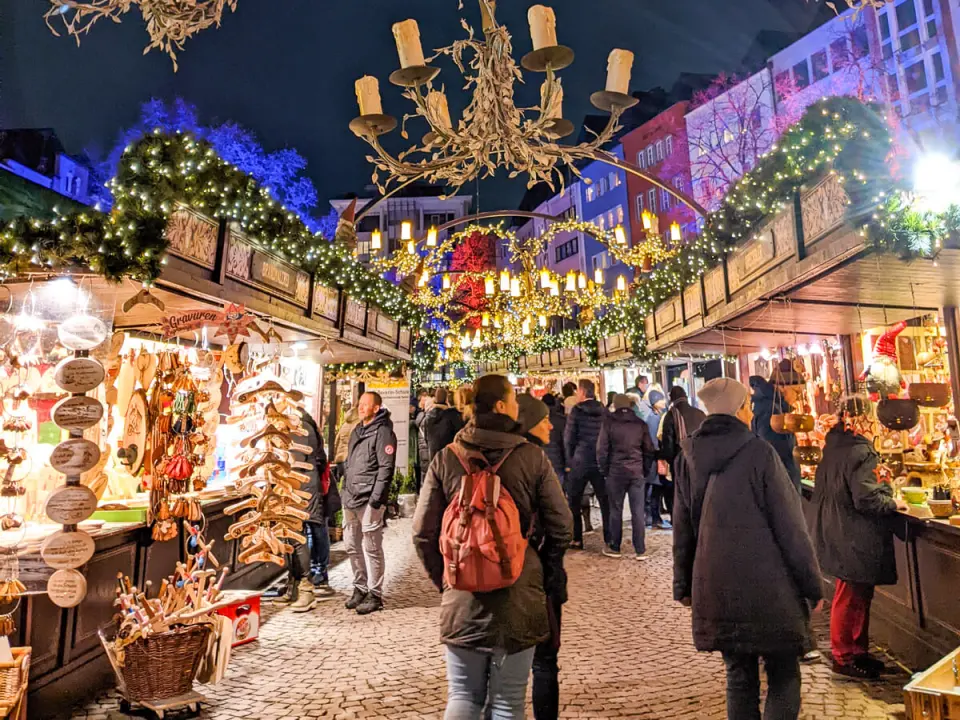
Get ready to dive into the festive vibe of Germany's Christmas markets, or Weihnachtsmärkte, which light up towns and cities from late November through December! These markets are a total treat for your senses, with the sweet smell of mulled wine, roasted chestnuts, and gingerbread filling the air. If you want the ultimate experience, check out Nuremberg or Dresden. Nuremberg’s Christkindlesmarkt is legendary—one of the oldest and most famous, showcasing beautiful handcrafted ornaments and classic toys.
I fell in love with the idea of Christmas markets when I was stationed in Stuttgart, and ever since, I’ve been on the lookout for them whenever I travel. There’s just something magical about wandering through the stalls, soaking in the festive atmosphere.
For a little luxury, consider staying at the Hotel Bayerischer Hof in Munich. This classy hotel mixes historic charm with modern comforts, putting you right in the middle of Munich’s lively squares and markets.
And don’t miss out on trying Stollen, a delicious fruit bread dusted with powdered sugar. It's a holiday must-have in Germany, usually enjoyed with a warm cup of hot Glühwein (mulled wine). The mix of spices and dried fruits in Stollen really captures the cozy spirit
of the season.
Cozy Homemade Glühwein Recipe

Get ready to warm up your chilly evenings with a delightful cup of Glühwein! This spiced wine is perfect for holiday gatherings or a cozy night in. Let’s dive into this easy-peasy recipe that will have your home smelling like a winter wonderland!
Ingredients You'll Need:
1 bottle of red wine (750 ml) - go for something fruity!
1 orange (sliced)
1 lemon (sliced)
1/4 cup sugar (adjust to your sweetness preference)
2-3 cinnamon sticks
4-5 whole cloves
2-3 star anise (optional, but oh-so-fancy!)
1/4 cup brandy (optional, for an extra kick!)
Instructions to Create Your Glühwein:
Prep Your Ingredients: Start by slicing your orange and lemon. You’ll want those zesty slices to infuse the wine with a citrusy punch!
Combine in a Pot: In a large saucepan, pour in the bottle of red wine. Add the orange slices, lemon slices, sugar, cinnamon sticks, cloves, and star anise.
Heat It Up: Gently heat the mixture over medium-low heat. You want it warm, not boiling. Keep it cozy! Stir occasionally until the sugar dissolves.
Let It Steep: Once it's warm and the sugar is all dissolved, let it simmer on low heat for about 20-30 minutes. This is where the magic happens—let those spices and fruits mingle!
Add the Brandy: If you’re feeling adventurous, stir in the brandy for an extra layer of flavor. Trust us; it’s worth it!
Strain and Serve: After steeping, strain the Glühwein through a fine mesh sieve to remove the solids. Pour it into your favorite mugs or heatproof glasses.
Garnish and Enjoy: Feel free to garnish with a cinnamon stick or a slice of orange for that Instagram-worthy touch. Sip, savor, and enjoy the warmth!
Tips for the Perfect Glühwein:
Experiment with different spices! Cardamom and nutmeg can add a lovely twist.
Use leftover wine from your last gathering—no need for anything fancy!
If you like it sweeter, add more sugar or a splash of honey.
Now, grab your friends, cozy up by the fireplace, and enjoy your homemade Glühwein! Cheers! 🍷✨
Japan’s Quiet Winter Celebrations and Illuminations

Japan’s holiday season is a delightful twist on what we might expect from the Western tradition. Christmas here is less about the religious vibes and more about the romantic spark—think cozy dates under twinkling lights and festive markets filled with goodies. But hold onto your hats, because the real star of the show is the New Year, or Oshogatsu. This celebration is all about family, tradition, and a sprinkle of magic, with gatherings, shrine visits, and mouthwatering meals that will make your taste buds dance!
Now, let’s talk about winter in Japan, where the scenery transforms into a fairy tale wonderland. One of the most jaw-dropping experiences is the illumination displays that light up cities like Tokyo and Kobe. Picture this: millions of LED lights twinkling in parks and along the streets, creating a landscape so magical you’ll feel like you’ve walked into a dream. And if you want to take your experience up a notch, you simply must book a stay at the Park Hyatt Tokyo. Seriously, the views of the city skyline and the majestic
Mount Fuji is nothing short of breathtaking!

And speaking of breathtaking, let’s dive into the culinary delights awaiting you during the New Year. You can’t visit Japan during this time without indulging in Osechi-ryori. This isn’t just food; it’s a beautifully arranged feast packed into a fancy box, with each dish symbolizing good fortune, health, and happiness. These culinary artworks are prepared ahead of time, so you can kick back and enjoy them over the first few days of January. Trust me, your taste buds will thank you!

With its unique holiday spirit, dazzling lights, and delicious food, it’s bound to be an unforgettable experience that’ll leave you with a heart full of joy and a camera roll bursting with memories!
Australia’s Summer Holiday Vibes and Festive Traditions

In Australia, the holiday season falls during summer, which means warm weather and outdoor celebrations. Christmas often involves barbecues on the beach, backyard parties, and enjoying fresh seafood. Sydney and Melbourne are popular destinations for holiday travelers, offering a mix of city excitement and natural beauty.
For a luxurious getaway, the Qualia Resort on Hamilton Island in the Great Barrier Reef offers stunning ocean views and world-class amenities. It’s perfect for those wanting to escape the winter chill elsewhere and soak up the sun.

Pavlova Recipe
Pavlova is a classic Australian dessert that is both light and delicious, making it a perfect choice for festive occasions. Here’s how to make this delightful meringue-based dessert topped with fresh fruit.

Ingredients
For the meringue:
4 large egg whites
1 cup (200g) caster sugar
1 teaspoon white vinegar
1 teaspoon cornstarch
1 teaspoon vanilla extract
For the topping:
1 cup (240ml) heavy cream
2 tablespoons icing sugar (powdered sugar)
1 teaspoon vanilla extract
Fresh fruits (such as strawberries, kiwi, passionfruit, and blueberries)
Instructions
Preheat the oven: Preheat your oven to 120°C (250°F). Line a baking tray with parchment paper and draw a 20cm (8-inch) circle on the paper as a guide.
Make the meringue: In a clean, dry bowl, beat the egg whites with an electric mixer on medium speed until soft peaks form. Gradually add the caster sugar, one tablespoon at a time, while continuing to beat until the mixture is glossy and stiff peaks form.
Add vinegar, cornstarch, and vanilla: Gently fold in the vinegar, cornstarch, and vanilla extract using a spatula until well combined. Be careful not to deflate the meringue.
Shape the meringue: Spoon the meringue mixture onto the prepared baking tray, using the circle as a guide. Create a slight well in the center to hold the toppings later.
Bake: Place the meringue in the preheated oven and bake for about 1 hour and 15 minutes. The meringue should be crisp on the outside and soft on the inside. Turn off the oven and let the pavlova cool completely in the oven with the door slightly ajar.
Prepare the topping: In a mixing bowl, whip the heavy cream with icing sugar and vanilla extract until soft peaks form. Be careful not to over-whip.
Assemble the pavlova: Once the meringue is completely cool, carefully transfer it to a serving platter. Spread the whipped cream over the top of the meringue, then arrange the fresh fruit on top.
Serve: Slice and serve immediately, enjoying the contrast of the crisp meringue, creamy topping, and fresh fruit.
Tips
Ensure that your mixing bowl and beaters are completely clean and dry to achieve the best results when whipping the egg whites.
Feel free to use any combination of fresh fruits that you like or have on hand.
Pavlova can be made a day in advance; just store the meringue in an airtight container until ready to serve.
Enjoy this traditional Australian dessert at your next celebration!
Kwanzaa’s Rich Cultural Heritage in the United States

Kwanzaa is a week-long celebration honoring African heritage and culture, observed from December 26 to January 1. It focuses on seven principles such as unity, self-determination, and creativity. While not as widely commercialized as Christmas, Kwanzaa holds deep meaning for many families.
Origins of Kwanzaa
Kwanzaa was created in 1966 by Dr. Maulana Karenga, a professor of black studies, as a response to the tumultuous social and political climate of the time, particularly the civil rights movement. The holiday was designed to celebrate African culture and foster a sense of community among African Americans. The name "Kwanzaa" is derived from the Swahili phrase "matunda ya kwanza," meaning "first fruits," symbolizing the harvest and the importance of community and family.
Dr. Karenga established Kwanzaa to promote African traditions, values, and the importance of self-determination, collective responsibility, and cultural pride. Each of the seven days of Kwanzaa is dedicated to one of the seven principles, known as the Nguzo Saba, which include:
Umoja (Unity): To strive for and maintain unity in the family, community, nation, and race.
Kujichagulia (Self-Determination): To define and name ourselves, as well as to create and speak for ourselves.
Ujima (Collective Work and Responsibility): To build and maintain our community together and make our brothers' and sisters' problems our problems.
Ujamaa (Cooperative Economics): To build and maintain our own stores, shops, and other businesses and to profit from them together.
Nia (Purpose): To make our collective vocation the building and developing of our community in order to restore our people to their traditional greatness.
Kuumba (Creativity): To do always as much as we can, in the way we can, in order to leave our community more beautiful and beneficial than we inherited it.
Imani (Faith): To believe with all our heart in our people, our parents, our teachers, our leaders, and the righteousness and victory of our struggle.
Traditional Meals During Kwanzaa

A traditional Kwanzaa meal often features soul food favorites, which serve as a connection to the African heritage and community. Common dishes include:
Collard Greens: Symbolizing the struggle for freedom and the importance of community.
Black-Eyed Peas: Representing wealth and prosperity.
Cornbread: Signifying the importance of the harvest.
Jollof Rice: A popular West African dish that brings families together.
Sweet Potatoes: Often prepared in various ways, representing the richness of the land.
These meals are typically enjoyed during the Karamu feast on the sixth day of Kwanzaa, where families gather to celebrate with food, music, and storytelling.
Cultural Information and Practices
Kwanzaa is marked by various rituals and practices that enhance the celebration of African heritage. Some of these include:
Lighting the Kinara: A seven-branched candle holder, where one candle is lit each night to represent the seven principles.
Community Gatherings: Events that include music, dance, poetry, and storytelling, fostering a sense of togetherness.
Crafts and Gifts: Handmade gifts and crafts that reflect African culture and history are often exchanged, emphasizing the importance of creativity and self-expression.
Top Places Worldwide to Immerse in Kwanzaa Traditions
If you want to experience Kwanzaa celebrations, consider visiting the following cities known for their vibrant Kwanzaa events:
Atlanta, Georgia: Known for its rich African American culture, Atlanta hosts numerous Kwanzaa events, including festivals and community gatherings.
Washington, D.C.: The nation’s capital offers a variety of cultural events, performances, and educational programs during Kwanzaa.
Los Angeles, California: Home to a large African American population, L.A. features celebrations that include music, dance, and food festivals.
New York City, New York: NYC hosts various events, including art exhibits, performances, and community gatherings that highlight African culture.
Chicago, Illinois: Known for its strong African American community, Chicago features cultural events and educational programs throughout Kwanzaa.
For a luxurious stay, the Four Seasons Hotel Washington, D.C. offers comfort and easy access to these cultural hubs, making it an ideal spot for visitors looking to immerse themselves in the Kwanzaa spirit.
The holiday season is a wonderful time to explore new cultures and traditions. Whether you’re drawn to the twinkling Christmas markets of Germany, the serene winter illuminations in Japan, the sunny celebrations in Australia, or the meaningful Kwanzaa festivities in the U.S., each offers something special to enjoy.
It’s never too late to plan your next holiday adventure. Ready to start? Click the button below to explore travel options and make your dream holiday a reality.


Comments